
Table of Contents
ToggleHow to Assist a Person Having a Fainting Spell Repeatedly
Introduction to Fainting (Syncope)
Fainting, medically known as syncope, is a sudden and temporary loss of consciousness caused by reduced blood flow to the brain. While many people experience fainting once or twice in their lifetime, others may suffer from repeated fainting spells, which can be alarming for both the affected person and those around them. Knowing how to assist someone during these episodes is crucial because timely action can prevent injuries and even save lives.
Fainting is often mistaken for a simple weakness or dizziness, but it is far more serious when it occurs repeatedly. Recurrent fainting may signal an underlying health issue, such as cardiovascular problems, nervous system disorders, or even emotional stress. For caregivers, friends, and family, it’s essential to learn the correct steps to help the person safely recover and minimize risks.
The good news is that most fainting spells are not life-threatening, but ignoring them can lead to dangerous falls, injuries, or delayed medical diagnosis. By understanding the causes, recognizing warning signs, and taking immediate action, you can become better prepared to assist someone going through these frightening episodes.
What is Fainting?
Fainting is not just “passing out.” It’s the body’s way of telling us something is wrong, even temporarily. Essentially, fainting happens when there’s a brief drop in blood flow or oxygen supply to the brain. This sudden lack of oxygen causes the person to collapse and lose consciousness for a short period, usually a few seconds to minutes.
There are different types of fainting, including:
-
Vasovagal syncope – the most common type, often triggered by stress, pain, or prolonged standing.
-
Situational syncope – linked to specific actions like coughing, laughing, or urinating.
-
Cardiac syncope – caused by heart problems such as irregular heartbeat or structural heart disease.
-
Neurological syncope – related to conditions like seizures or migraines.
For someone experiencing fainting repeatedly, identifying the root cause is essential. If fainting is frequent, it should never be dismissed as “normal.” Instead, it’s a clear sign to seek professional medical advice.
Why Do Some People Faint Repeatedly?
Recurrent fainting often signals that the body is struggling with underlying issues. For example, a person might faint repeatedly due to chronic low blood pressure, dehydration, or heart rhythm disorders. Some individuals have heightened sensitivity in their nervous system, making them more prone to fainting in stressful or triggering situations.
Other reasons include:
-
Anemia or blood disorders reducing oxygen delivery to the brain.
-
Diabetes and sudden drops in blood sugar.
-
Medications like blood pressure drugs or diuretics.
-
Neurological conditions such as epilepsy or Parkinson’s disease.
Interestingly, fainting can also be influenced by psychological factors. Anxiety, panic attacks, or post-traumatic stress can trigger fainting spells in certain people. This highlights the importance of looking at fainting not just as a physical health issue but also as a condition influenced by emotional well-being.
For those assisting someone with repeated fainting, it’s critical to understand that the issue is not about weakness or lack of willpower. Instead, it’s the body reacting to a complex interplay of medical, environmental, and psychological factors.
Common Causes of Recurrent Fainting Spells
Fainting spells do not occur in isolation. There is almost always a trigger or underlying cause, and identifying these can make all the difference in preventing future episodes. Let’s break down some of the most common causes.
Medical Conditions Linked to Frequent Fainting
-
Cardiac problems: Arrhythmias, heart valve issues, or structural abnormalities can disrupt normal blood flow.
-
Neurological disorders: Epilepsy, seizures, or transient ischemic attacks (mini-strokes).
-
Metabolic issues: Low blood sugar (hypoglycemia), thyroid imbalances, or anemia.
-
Blood pressure fluctuations: Orthostatic hypotension (drop in blood pressure when standing) is a common culprit.
These medical issues require immediate evaluation by a doctor, as recurrent fainting may be an early warning sign of something serious.
Environmental and Lifestyle Triggers
Not all fainting episodes are tied to a medical condition. Lifestyle factors often play a big role too.
-
Dehydration – not drinking enough water reduces blood volume.
-
Heat exposure – standing in hot weather can lead to fainting.
-
Excessive exercise – pushing the body too far without proper hydration or nutrition.
-
Stress and emotional triggers – intense fear, anxiety, or pain can activate the vagus nerve, causing fainting.
Recognizing whether the cause is medical or lifestyle-related is vital for prevention. If the spells are happening repeatedly, chances are there’s a combination of triggers at play.
Warning Signs Before a Fainting Spell
Most fainting spells don’t happen without warning. In fact, the body often gives early signals before collapse. Recognizing these signs can allow quick intervention, potentially preventing a complete faint.
Physical Symptoms to Watch For
-
Lightheadedness or dizziness.
-
Sudden blurred vision or “tunnel vision.”
-
Pale, clammy, or sweaty skin.
-
Nausea or stomach discomfort.
-
Weakness in legs or sudden fatigue.
-
Rapid or irregular heartbeat.
Emotional and Behavioral Signs
Some people may suddenly feel anxious, restless, or detached from reality. Others describe hearing a “buzzing” sound in their ears or feeling like they are about to black out. In children and teens, fainting may follow periods of high stress or emotional distress.
Knowing these warning signs is crucial because if someone feels them, they should sit or lie down immediately to avoid falling and injuring themselves.
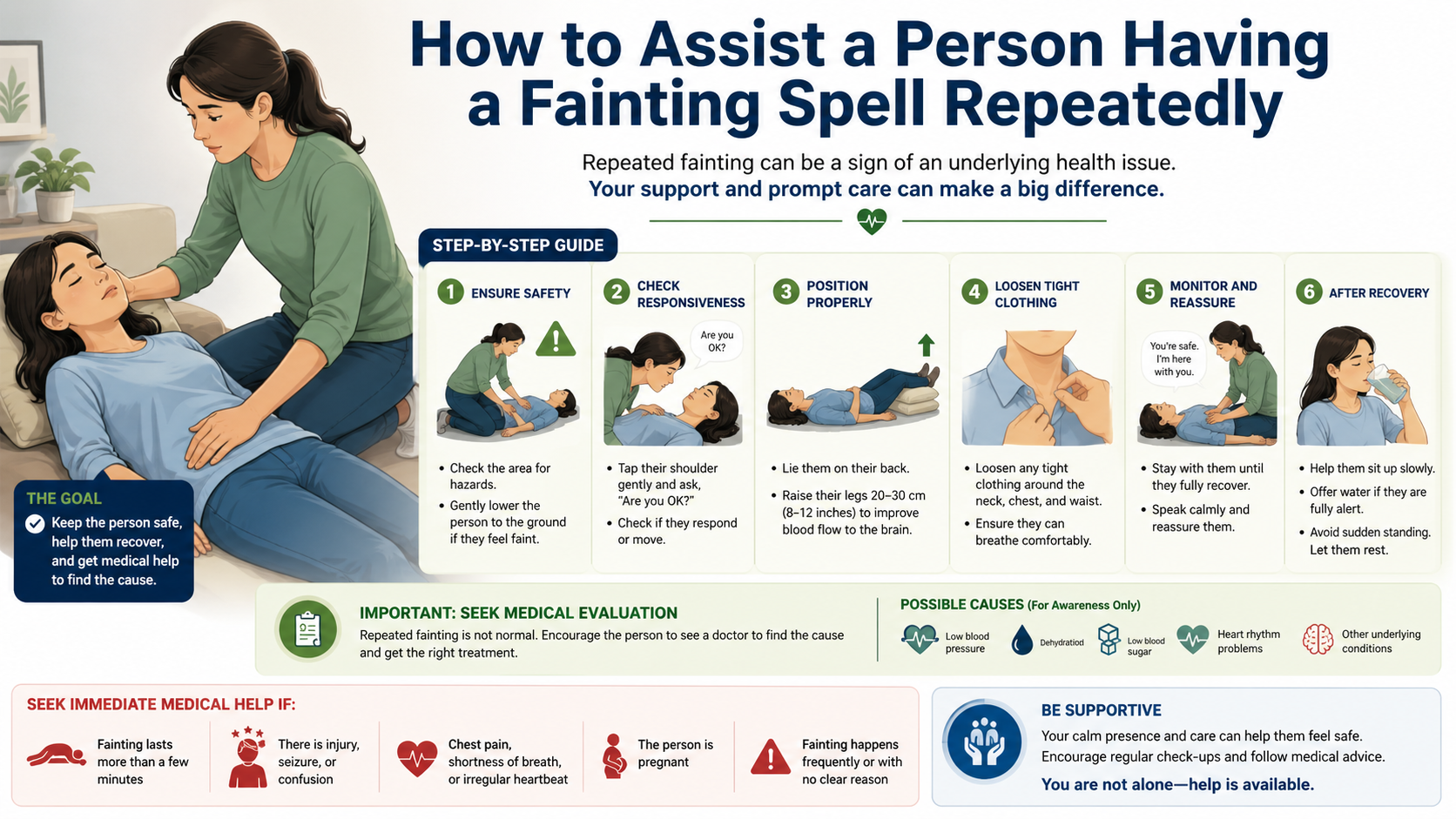
Immediate First Aid Steps During a Fainting Episode
When a person collapses, panic often takes over—but knowing first aid steps can save precious seconds and prevent complications.
Ensuring Safety of the Person
-
Clear the surrounding area of sharp objects or obstacles.
-
If in a crowded place, ask others to give space and stay calm.
-
Support the person as they go down to prevent head injuries.
Correct Positioning of the Body
-
Lay the person flat on their back.
-
Elevate their legs slightly (around 12 inches) to improve blood flow to the brain.
-
Loosen tight clothing around the neck or waist.
Monitoring Breathing and Pulse
-
Check if the person is breathing normally.
-
If there’s no breathing or pulse, immediately start CPR and call emergency services.
-
Never attempt to make the person drink water or sit up too quickly.
Most fainting episodes resolve within a minute or two, but staying vigilant during this time is essential.
Aftercare Once the Person Regains Consciousness
After the person wakes up, the most important step is ensuring they recover safely and calmly. Many people feel confused, weak, or embarrassed after fainting, so offering reassurance is just as important as medical assistance.
What to Do Immediately After Recovery
-
Keep them lying down for a few minutes until they feel steady. Sitting or standing too soon may cause another fainting spell.
-
Offer water once they’re fully alert, but avoid giving it immediately when they’re still groggy.
-
Encourage slow movements if they want to sit up—help them transition gradually.
-
Ask questions like “Do you feel dizzy?” or “Do you have chest pain?” to assess their condition.
-
Note the details of the episode, such as how long they were unconscious and what symptoms occurred before fainting. This information will help doctors later.
When to Seek Medical Help Urgently
While some fainting spells are harmless, others could be a sign of serious health issues. Call emergency services if the fainting:
-
Lasted longer than a few minutes.
-
Happened without warning signs.
-
Was followed by chest pain, shortness of breath, or irregular heartbeat.
-
Occurred during exercise or physical activity.
-
Involved seizure-like movements.
-
Left the person injured from a fall.
Never assume repeated fainting is “just normal.” Getting a medical evaluation ensures hidden health problems are not missed.
Long-Term Assistance for Someone with Recurrent Fainting
If someone faints repeatedly, short-term help isn’t enough—they’ll need long-term strategies and support. Your role as a family member, friend, or caregiver is to encourage lifestyle changes and ensure they seek medical care.
Lifestyle Modifications to Reduce Spells
-
Stay hydrated: Encourage them to drink plenty of water and electrolyte-rich fluids.
-
Balanced diet: Include iron-rich foods (like leafy greens and lean meats) to prevent anemia.
-
Avoid triggers: Help them identify what causes fainting—whether it’s heat, stress, or standing too long—and minimize exposure.
-
Regular rest: Fatigue increases the risk of fainting, so maintaining healthy sleep patterns is essential.
-
Compression stockings: These help improve circulation, especially for people with low blood pressure.
Supporting Medical Treatment and Diagnosis
Recurrent fainting often requires specialist care. Encourage the person to:
-
Visit a cardiologist for heart-related checks.
-
Consult a neurologist if seizures or brain issues are suspected.
-
Track fainting episodes in a health diary to identify patterns.
-
Take prescribed medications regularly and attend follow-up appointments.
As a supporter, you can accompany them to appointments, remind them of medication schedules, and help manage lifestyle changes.
Emotional and Psychological Support
Living with recurrent fainting is more than just a physical challenge—it affects the person’s mental health and confidence. Many people begin to fear going out alone or participating in activities, which can lead to social isolation.
Helping the Person Cope with Fear of Fainting
-
Offer reassurance: Remind them that fainting is not their fault and they’re not a burden.
-
Stay calm during episodes: Your calmness will help them feel less anxious about fainting in public.
-
Normalize the condition: Share information that fainting is common and manageable with the right care.
Building Confidence and Independence
-
Encourage them to carry a medical ID card explaining their condition.
-
Teach them to recognize early warning signs and sit down immediately when feeling faint.
-
Help them build a support network of friends, colleagues, and family who know how to assist.
-
Suggest relaxation practices like yoga or meditation, which can reduce stress-related fainting.
Supporting their emotional well-being is just as important as physical assistance because confidence plays a huge role in preventing social withdrawal.
Preventive Measures in Daily Life
The best way to assist someone prone to fainting spells is to reduce the likelihood of them happening in the first place. Small adjustments to daily life can make a huge difference.
Dietary and Hydration Tips
-
Increase salt intake (only if approved by a doctor) to help maintain blood pressure.
-
Eat smaller, frequent meals instead of large heavy ones to avoid blood sugar crashes.
-
Avoid excessive caffeine and alcohol, as they can dehydrate the body.
-
Iron-rich foods prevent anemia-related fainting.
Exercise and Posture Awareness
-
Slow transitions: Encourage them to rise slowly from sitting or lying positions.
-
Leg exercises: Flexing and crossing legs when standing helps improve circulation.
-
Regular, moderate exercise strengthens the cardiovascular system.
-
Avoid prolonged standing—take breaks to sit or move around.
These preventive measures not only reduce fainting risk but also improve overall health, making life more manageable for the person.
Understanding Risk Factors
Fainting doesn’t affect everyone equally. Certain risk factors increase the chances of having repeated spells, and being aware of these helps in prevention.
Age and Gender Differences in Fainting
-
Teenagers and young adults are more prone to vasovagal fainting due to hormonal and circulatory changes.
-
Older adults may faint due to heart disease, medication side effects, or blood pressure fluctuations.
-
Women are slightly more prone to fainting, especially during hormonal shifts (like menstruation or pregnancy).
Genetic and Family History Influences
-
Some families have a history of vasovagal syncope, making members more susceptible.
-
Heart rhythm disorders, which can cause fainting, also run in families.
-
Understanding family history helps doctors make more accurate diagnoses.
By recognizing these risk factors, caregivers can be more alert and proactive in preventing fainting episodes.
Myths and Misconceptions About Fainting
When someone faints, bystanders often act based on myths they’ve heard rather than actual medical knowledge. Unfortunately, these misconceptions can make the situation worse instead of helping. Let’s clear up the most common misunderstandings.
Dangerous Practices to Avoid
-
Splashing water on the face: While it looks dramatic in movies, it does little to help and may even cause choking if the person isn’t fully conscious.
-
Slapping or shaking the person: This can cause injury and doesn’t speed up recovery.
-
Forcing food or drink: Offering water or food while the person is unconscious is dangerous because it can lead to choking.
-
Standing them up quickly: The blood supply to the brain is still low, so forcing them upright often triggers another fainting episode.
Instead of these harmful actions, focus on safe, evidence-based first aid like laying them down flat, elevating their legs, and checking their breathing.
Clarifying Common Misunderstandings
-
“Fainting is always harmless.” False. Repeated fainting can signal heart or neurological issues.
-
“Only weak people faint.” False. Even athletes and healthy individuals can faint under certain conditions.
-
“They’re faking it.” False. Fainting is a real medical response to reduced blood flow, not an act of attention-seeking.
-
“Fainting is the same as a seizure.” False. While they can look similar, seizures involve abnormal brain activity, whereas fainting is due to blood flow interruption.
Understanding these truths ensures you don’t put someone in more danger while trying to help.
Helping a Child or Teen with Recurrent Fainting
Children and teenagers faint more often than adults, usually due to vasovagal syncope or low blood pressure. While it can be frightening for parents, most cases are not life-threatening. However, knowing how to manage these situations is key.
Special Care Considerations
-
Stay calm: Kids often become more scared if adults panic. Your reassurance helps them recover faster.
-
Teach recognition of symptoms: Encourage children to speak up if they feel dizzy, lightheaded, or see “spots” before their vision.
-
Encourage hydration: Young people often don’t drink enough fluids, making dehydration a common trigger.
-
Doctor check-ups: Since recurrent fainting may signal anemia, heart issues, or hormonal changes, regular medical evaluations are essential.
Communicating with Schools and Caregivers
-
Inform teachers and coaches about the condition so they can act quickly if an episode occurs.
-
Provide written instructions on what to do if your child faints at school.
-
Encourage safe participation in sports but with awareness of warning signs.
-
Role-play scenarios with your child so they know how to react if they feel faint in public.
By preparing both the child and their environment, you greatly reduce risks and anxiety related to fainting.
Workplace and Public Preparedness
Fainting doesn’t only happen at home—it can occur at work, school, or public places. Being prepared in these settings ensures the person gets timely and effective help.
How Colleagues Can Assist
-
Know basic first aid: Training coworkers in fainting response reduces panic and improves safety.
-
Recognize triggers at work: Stress, long hours without breaks, or standing too long can all contribute to fainting.
-
Allow flexibility: If someone is prone to fainting, flexible schedules, hydration breaks, and seated tasks can help.
-
Create a safe environment: Clear pathways to prevent injuries if someone collapses suddenly.
Safety Measures in Public Spaces
-
Public awareness campaigns can educate people on proper first aid for fainting.
-
Install first aid kits and train staff in schools, gyms, and malls.
-
Medical ID bracelets help strangers know how to respond if a person faints.
-
Emergency hotlines and apps allow for quick medical support in public areas.
Preparedness at work and in public spaces ensures that fainting doesn’t escalate into serious injuries or emergencies.
Role of Technology in Monitoring Fainting Spells
Technology has become a powerful tool in managing recurrent fainting spells. From wearables to smartphone apps, these innovations provide early warnings and valuable health tracking.
Wearable Devices for Tracking Health
-
Smartwatches can monitor heart rate, oxygen levels, and even detect irregular heartbeats.
-
Fitness trackers record daily activity, hydration reminders, and sleep patterns—all helpful for fainting prevention.
-
Medical-grade devices can track blood pressure fluctuations in real time.
These devices help identify fainting triggers and allow patients to share accurate health data with doctors.
Apps and Medical Alerts
-
Symptom-tracking apps allow users to log fainting episodes and possible triggers.
-
Emergency alert apps can notify family or emergency contacts instantly when someone faints.
-
Medical ID apps store health information on smartphones, making it easier for first responders to access.
By integrating technology into daily life, people prone to fainting gain greater independence and safety, while caregivers can feel reassured about monitoring their loved ones.
When Recurrent Fainting Indicates a Serious Health Concern
While many fainting episodes are harmless, there are times when they point to life-threatening conditions. Recognizing these red flags could save someone’s life.
Conditions That Require Immediate Attention
-
Heart-related problems: Arrhythmias, blocked arteries, or heart failure.
-
Neurological conditions: Epilepsy, stroke, or brain tumors.
-
Severe dehydration or blood loss: Internal bleeding can cause recurrent fainting.
-
Endocrine disorders: Uncontrolled diabetes or thyroid disease.
These conditions require urgent medical evaluation, often involving specialists like cardiologists or neurologists.
Red Flags You Should Never Ignore
-
Fainting without warning or during physical exertion.
-
Associated chest pain, shortness of breath, or palpitations.
-
Prolonged unconsciousness (more than a few minutes).
-
Seizure-like activity such as jerking movements or loss of bladder control.
-
Frequent fainting despite lifestyle changes and treatment.
If any of these occur, do not wait—seek emergency medical care immediately.
Conclusion
Helping a person with recurrent fainting spells is about more than reacting in the moment—it requires a long-term, proactive approach. Recognizing warning signs, responding with proper first aid, encouraging lifestyle adjustments, and ensuring medical follow-ups all play a role in keeping the person safe. Just as importantly, offering emotional support helps them regain confidence and independence in their daily life.
By staying informed and prepared, you can transform a frightening situation into a manageable one—making a real difference in the life of someone who faints repeatedly.
FAQs
1. Can fainting spells be completely prevented?
Not always, but with proper hydration, diet, stress management, and medical care, their frequency can be reduced significantly.
2. Should someone with frequent fainting stop driving?
Yes, until cleared by a doctor. Fainting while driving poses serious risks.
3. Is fainting dangerous during pregnancy?
It can be, since it may affect both mother and baby. Pregnant women should report all fainting episodes to their doctor.
4. Can fainting spells be treated with medication?
Yes, depending on the cause. Doctors may prescribe medicines for blood pressure regulation, heart conditions, or neurological issues.
5. How long should someone rest after fainting?
At least 15–30 minutes, but more if they still feel weak or dizzy. Full recovery depends on the underlying cause.
1 thought on “How to Assist a Person Having a Fainting Spell Repeatedly”
Comments are closed.