
Table of Contents
ToggleHow to Treat a Dislocated Joint Safely
Dislocating a joint can be both painful and frightening. It usually happens suddenly—during sports, a fall, or even an awkward movement. Knowing how to respond in those first few moments makes all the difference between quick recovery and long-term damage. This guide walks you through everything: from identifying a dislocation to providing first aid, seeking medical treatment, and caring for the joint afterward. By the end, you’ll feel confident about handling such situations safely and effectively.
Introduction to Joint Dislocations
What is a Joint Dislocation?
A joint dislocation happens when the bones that normally meet in a joint are forced out of their natural position. Think of a hinge on a door. If the hinge shifts out of place, the door won’t move smoothly. Similarly, when the bones in your shoulder, knee, or finger get displaced, the joint no longer functions correctly. Unlike a sprain, which only affects the ligaments, a dislocation is more severe because it directly disrupts the alignment of the bones.
Dislocations can be partial (subluxation), where the joint only shifts slightly, or complete, where the bones are entirely out of place. Both are serious and should be treated as medical emergencies. Ignoring a dislocation can damage nerves, tear ligaments, and even cut off blood circulation to the affected area.
Common Causes of Joint Dislocations
Dislocations usually occur due to sudden impact or forceful movement. Sports injuries are one of the most frequent causes, especially in high-contact activities like football, rugby, or wrestling. Athletes often dislocate shoulders, fingers, or knees when they collide or fall awkwardly.
Another common cause is accidents. Falling on an outstretched arm, slipping on a wet floor, or being involved in a car crash can easily push joints out of place. Even something as simple as tripping on uneven ground can lead to a dislocation, especially in older adults with weaker bones.
Genetics also play a role. Some people are born with looser ligaments, making their joints more flexible but less stable. This condition, often called joint hypermobility, increases the risk of dislocations.
Joints Most Prone to Dislocation
Not all joints are equally vulnerable. Some joints are designed to move more freely, which also makes them more susceptible to slipping out of place.
-
Shoulder Joint: The most commonly dislocated joint. Its wide range of motion makes it useful but unstable.
-
Knee Joint: Often dislocated due to sports injuries or car accidents.
-
Hip Joint: Less common but extremely serious, often caused by high-impact accidents.
-
Elbow and Fingers: Frequent in athletes, especially basketball and volleyball players.
-
Jaw Joint (TMJ): Can dislocate during yawning or dental procedures.
Understanding which joints are at higher risk helps you stay alert and take preventive measures during physical activities.
Recognizing the Symptoms of a Dislocated Joint
Visible Signs You Can Notice Immediately
The first thing you’ll usually notice is that the joint looks “off.” The affected area might appear crooked, swollen, or oddly shaped. For example, a dislocated shoulder may cause the arm to hang lower than usual, or a dislocated finger may bend awkwardly. In many cases, the bone visibly protrudes, signaling that something is wrong.
Unlike fractures, which may not always look obvious, dislocations are often easy to spot because the joint is literally out of alignment. Recognizing this visual cue is crucial for responding quickly.
Pain, Swelling, and Restricted Movement
Pain is usually sharp and immediate after a dislocation. The surrounding muscles often spasm in response, which increases discomfort and makes it nearly impossible to move the joint. Swelling follows shortly after as blood and fluid rush to the injured area.
Attempting to move the joint can make the pain unbearable. Even small movements can worsen the injury by stretching torn ligaments or pressing on nerves. That’s why immobilizing the joint as soon as possible is the safest course of action.
Difference Between a Dislocation and a Fracture
It’s easy to confuse a dislocation with a broken bone, especially since both injuries share symptoms like pain, swelling, and deformity. However, there are key differences:
-
Dislocation: The joint looks out of place, but the bone remains intact. Movement is severely restricted.
-
Fracture: The bone itself is cracked or broken, often causing grinding sensations or abnormal movement.
Sometimes both happen together, especially in high-impact injuries. Because of this, medical imaging (like X-rays) is essential for accurate diagnosis. Until a doctor confirms, it’s best to treat the injury as both a fracture and dislocation by keeping it still and seeking emergency help.
First Aid for a Dislocated Joint
The Importance of Acting Quickly
When a dislocation happens, every second counts. Quick action reduces the risk of complications like nerve damage, blood vessel injury, or permanent joint instability. However, quick action does not mean reckless action. Many people make the mistake of trying to “pop” the joint back into place themselves, which often does more harm than good.
Instead, the goal of first aid is to protect the joint until professional medical help is available. Think of it as putting the injury on pause while waiting for experts to take over.
Step-by-Step First Aid Measures
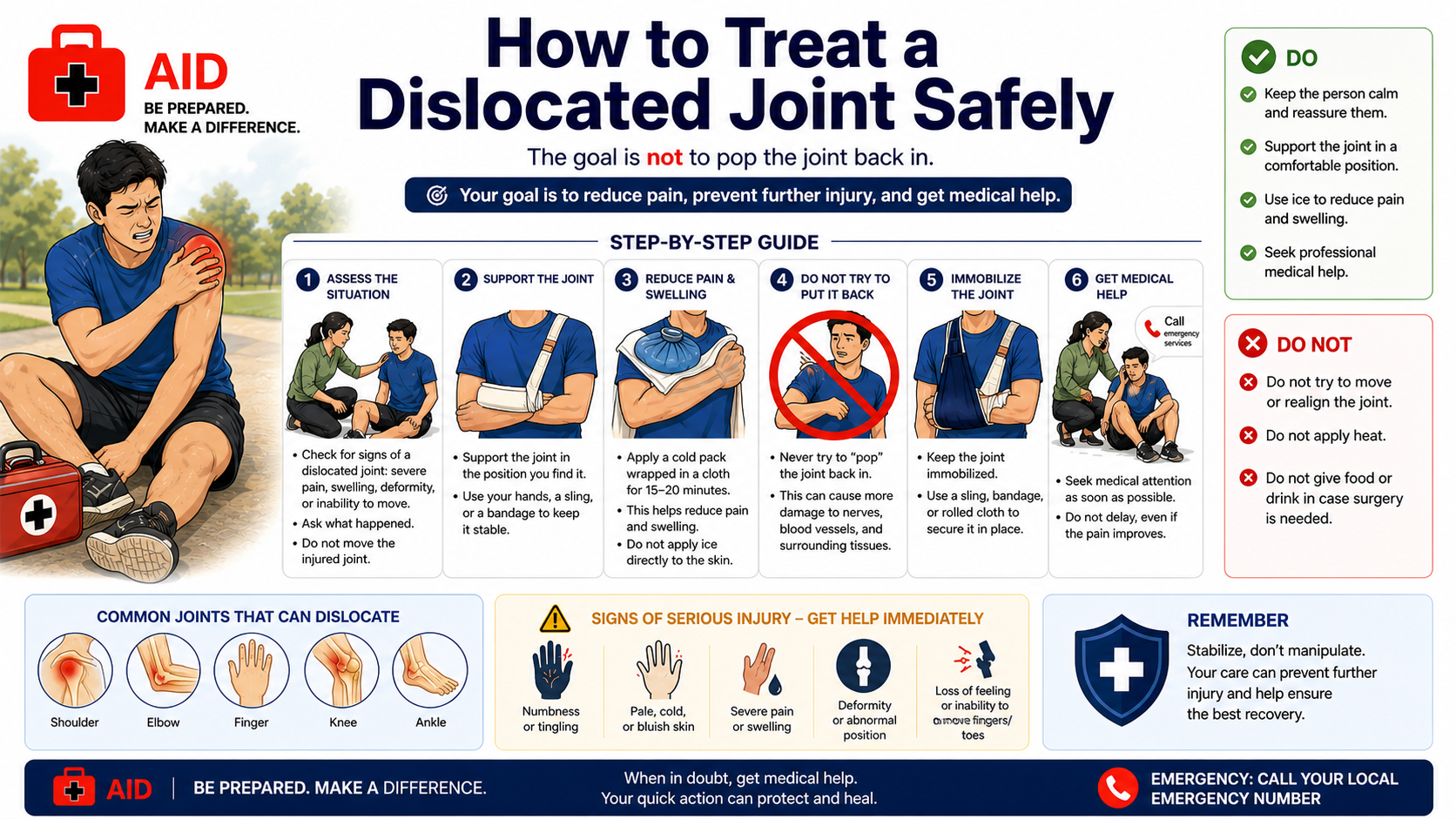
Here’s what to do if you suspect someone has a dislocated joint:
-
Stop all activity immediately – Continuing to move will worsen the injury.
-
Keep the joint still – Immobilize it in the exact position it was found. Don’t try to realign it.
-
Apply ice packs – Wrap ice in a cloth and place it over the injured area to reduce swelling and pain.
-
Use a sling or splint – Support the joint with whatever materials are available (cloth, bandage, even clothing).
-
Elevate the limb – If possible, keep the joint raised to reduce swelling.
-
Seek medical help right away – Call emergency services or head to the nearest hospital.
What NOT to Do During First Aid
While it’s tempting to “fix” the joint yourself, certain actions can turn a treatable injury into a permanent disability.
-
Don’t force the joint back in place – You risk tearing nerves, ligaments, and blood vessels.
-
Don’t give the person food or drink – They may need anesthesia for treatment, and eating could complicate the process.
-
Don’t apply direct heat – Heat increases swelling in the early stages. Cold therapy is best initially.
-
Don’t ignore the injury – Even if the pain reduces, untreated dislocations can cause long-term damage.
Medical Treatment for Joint Dislocations
Professional Reduction Techniques
Doctors use a process called “reduction” to return the joint to its proper position. Unlike the quick, forceful moves you see in movies, real reductions are carefully performed using specific techniques. Sometimes they use muscle relaxants or anesthesia to ease the process and reduce pain.
There are two main types of reduction:
-
Closed Reduction: Non-surgical manipulation of the joint, often done in the emergency room.
-
Open Reduction: Surgical intervention if the dislocation is complicated or involves surrounding tissue damage.
Both methods aim to restore alignment while minimizing long-term risks.
Pain Management and Medications
Once the joint is back in place, managing pain and inflammation becomes the next priority. Doctors may prescribe:
-
NSAIDs (Non-Steroidal Anti-Inflammatory Drugs) like ibuprofen for pain relief.
-
Muscle relaxants to ease spasms.
-
Opioids for severe cases (used short-term).
-
Antibiotics if there’s an open wound to prevent infection.
Proper pain control not only makes recovery easier but also allows the patient to start gentle movement sooner.
Imaging Tests and Diagnosis
To confirm the extent of the injury, doctors rely on imaging tests such as:
-
X-rays to check for fractures or bone displacement.
-
MRI scans to evaluate soft tissue damage (ligaments, tendons, cartilage).
-
CT scans for complex or unclear cases.
These tests guide the doctor in creating the best treatment plan and preventing hidden complications.
Home Care After Medical Treatment
Rest, Ice, Compression, and Elevation (RICE)
After professional treatment, home care becomes the key to full recovery. The RICE method is a time-tested approach:
-
Rest: Limit activities that put stress on the joint.
-
Ice: Apply ice packs for 15–20 minutes every few hours during the first 48 hours.
-
Compression: Use an elastic bandage to keep swelling down (but not too tight).
-
Elevation: Keep the joint raised above heart level whenever possible.
This simple routine accelerates healing and reduces discomfort.
How to Support the Joint with Splints or Slings
Doctors may recommend using a sling, brace, or splint to keep the joint stable during healing. The goal is to allow tissues like ligaments and tendons to repair themselves without unnecessary strain. Depending on the injury, these supports may be needed for a few days to several weeks.
Learning how to wear and adjust these supports correctly is crucial. Too much pressure can cut off circulation, while a loose fit may fail to protect the joint.
Diet and Supplements to Aid Recovery
Nutrition plays a huge role in joint recovery. A diet rich in protein, calcium, vitamin D, and omega-3 fatty acids strengthens bones and soft tissues. Foods like fish, leafy greens, nuts, seeds, and dairy products should be part of your daily meals.
Supplements such as glucosamine and chondroitin are also believed to support joint health, though results vary from person to person. Staying hydrated helps reduce inflammation and promotes overall healing.
Rehabilitation and Physical Therapy
Importance of Physiotherapy for Recovery
Recovering from a dislocated joint doesn’t stop once the bone is back in place. That’s only the beginning. Physiotherapy is the real game-changer in helping you regain full strength and mobility. When a joint dislocates, the supporting ligaments, muscles, and tendons are often stretched or torn. Without proper rehabilitation, you risk stiffness, weakness, or even recurring dislocations.
A physiotherapist designs a personalized recovery plan tailored to your injury and body type. In the early stages, therapy may focus on gentle range-of-motion exercises to prevent stiffness. Over time, the program evolves into strengthening workouts that rebuild stability. This progression ensures that your joint heals naturally while preventing future injuries.
Skipping therapy is like fixing a car’s tire without realigning the wheels—it might look fine at first, but problems will return quickly. Consistency is key; regular sessions and at-home exercises make a noticeable difference in the speed and quality of recovery.
Simple Exercises for Strengthening Joints
Once your doctor gives the green light, light exercises can help rebuild strength. Some common physiotherapy-approved movements include:
-
Pendulum swings (for shoulder dislocations): Lean forward and gently swing your arm in circles.
-
Heel slides (for knee dislocations): Lie on your back and slowly slide your heel toward your buttocks.
-
Finger stretches (for smaller joints): Press your fingers against a soft stress ball and release.
Each exercise focuses on improving range of motion, muscle strength, and joint stability. Remember: never rush recovery. If an exercise causes sharp pain, stop immediately and consult your therapist.
Preventing Stiffness and Long-Term Weakness
Immobilizing a joint is necessary at first, but keeping it still for too long can lead to stiffness and muscle atrophy. This is why balance is essential. You need rest for healing but also gradual movement to avoid long-term weakness.
Stretching, massage, and low-impact activities like swimming or cycling often help ease stiffness without straining the joint. A physiotherapist will usually recommend starting small—short sessions a few times a day instead of long, strenuous workouts.
The ultimate goal is to make the injured joint as strong and flexible as it was before the dislocation, if not stronger. That’s the best insurance against repeat injuries.
Preventing Future Joint Dislocations
Lifestyle Tips to Keep Joints Healthy
Prevention is always better than cure. Keeping your joints healthy reduces the chances of future dislocations. Some practical steps include:
-
Maintain a healthy weight: Extra weight puts more stress on joints.
-
Stay active: Regular exercise strengthens muscles that stabilize joints.
-
Warm up and stretch: Preparing your body before physical activity lowers injury risk.
-
Wear proper footwear: Good shoes improve balance and prevent falls.
These small habits can make a big difference in your joint stability. Think of them as daily investments in your body’s long-term health.
Protective Gear for Sports and Activities
If you play contact sports or engage in physically demanding activities, protective gear is a must. Helmets, knee pads, elbow pads, wrist guards, and supportive shoes all serve to reduce the risk of injury. Even simple aids like wrist straps for weightlifting or ankle braces for running can save you from painful accidents.
Athletes who’ve had previous dislocations often benefit from custom braces or tape wraps to provide extra support. While it might feel restrictive at first, protective gear ensures that your joints stay safe under pressure.
Strength Training for Joint Stability
Strong muscles act as a protective shield for your joints. When muscles around a joint are weak, the joint itself absorbs more impact during sudden movements. This increases the risk of dislocation.
Incorporating strength training into your weekly routine builds stability. Focus on exercises like:
-
Squats and lunges for knee stability
-
Shoulder presses and rows for shoulder support
-
Core workouts for overall balance and posture
The goal isn’t to lift heavy weights but to develop balanced strength. A well-rounded routine prevents one muscle group from overpowering another, which is a common cause of injuries.
Risks and Complications of Untreated Dislocations
Nerve Damage and Blood Flow Restriction
Leaving a dislocation untreated can be dangerous. When a bone is out of place, it may press on nearby nerves or blood vessels. This can cause numbness, tingling, or loss of sensation in the limb. In severe cases, restricted blood flow may lead to tissue death.
If you notice that the injured area feels cold, pale, or unusually weak, it’s a red flag. These symptoms require emergency treatment to prevent permanent damage.
Chronic Instability of the Joint
Another risk of untreated dislocations is chronic instability. Once a joint slips out of place, the supporting ligaments may never fully recover without proper care. This makes future dislocations more likely, even during simple activities like lifting a bag or reaching overhead.
Over time, instability may lead to a cycle of repeated injuries, making the joint weaker and more unreliable. This is why professional treatment and rehabilitation are non-negotiable.
Risk of Arthritis and Long-Term Pain
Dislocations also increase the risk of developing arthritis in the affected joint. The trauma damages cartilage, and repeated injuries speed up wear and tear. Arthritis brings chronic stiffness, pain, and reduced mobility—problems that can last a lifetime.
Even if the pain from the initial dislocation fades, untreated damage may show up years later in the form of degenerative joint disease. That’s why it’s vital to address dislocations thoroughly rather than brushing them off as temporary injuries.
When to Seek Emergency Help
Signs of Severe Dislocation
While all dislocations require medical attention, some symptoms signal an urgent emergency:
-
Visible deformity with extreme pain
-
Numbness or tingling around the joint
-
Inability to move or bear weight on the limb
-
Skin turning pale or blue near the injury
These signs indicate possible nerve or blood vessel damage and should never be ignored. Immediate medical care can prevent lasting harm.
Special Considerations for Children and Elderly
Children’s joints are still developing, which makes them more prone to dislocations from even minor accidents. On the other hand, elderly individuals often have weaker bones and reduced healing ability, making recovery slower and riskier.
Both groups require extra caution. In children, early treatment ensures normal growth and joint development. For seniors, close monitoring helps avoid complications like fractures or poor circulation.
Why Ignoring Symptoms is Dangerous
Some people make the mistake of “toughing it out” when they dislocate a joint, especially if the pain eases after a while. This approach is risky. Dislocations don’t heal correctly on their own. Bones may realign partially, but without proper medical guidance, the joint remains unstable and prone to repeat injuries.
Ignoring symptoms can turn a temporary problem into a lifelong disability. Quick action is always the safer, smarter choice.
Myths and Misconceptions About Joint Dislocations
Common Myths You Should Stop Believing
When it comes to dislocated joints, misinformation spreads quickly. Many people rely on old wives’ tales, sports folklore, or advice from friends rather than medical facts. One of the biggest myths is that you can simply “pop” the joint back into place yourself. While movies and TV shows often dramatize this idea, attempting it on your own is extremely dangerous. You risk tearing ligaments, damaging nerves, and worsening the injury.
Another widespread misconception is that once a joint is put back in place, everything is fine. In reality, the damage often extends beyond the displacement. Ligaments, tendons, and even cartilage may need weeks or months of rehabilitation. Ignoring this part of recovery leads to chronic instability.
Some people also believe that dislocations only happen to athletes. While sports increase the risk, everyday activities—like falling, tripping, or even stretching too far—can cause dislocations. Understanding these myths helps you stay cautious and treat the injury with the seriousness it deserves.
Facts Backed by Medical Evidence
Medical research confirms that joint dislocations are emergencies that require professional intervention. Doctors stress that only trained specialists should attempt reductions, using controlled techniques and sometimes anesthesia. Another proven fact is that untreated dislocations can result in long-term complications, including arthritis and repeated injuries.
It’s also a fact that physical therapy is just as important as the initial treatment. Even after the joint is reset, recovery is incomplete without rehabilitation. Evidence shows that patients who commit to physiotherapy regain full mobility faster and have lower recurrence rates.
By separating myths from facts, you protect yourself and others from making mistakes that could lead to permanent damage.
Special Cases of Joint Dislocations
Shoulder Dislocations and How They Differ
The shoulder joint is the most commonly dislocated joint in the body, thanks to its wide range of motion. It’s like a golf ball sitting on a shallow tee—flexible but unstable. Shoulder dislocations often occur during sports or falls where the arm is stretched awkwardly.
Symptoms include an obvious deformity, intense pain, and an inability to move the arm. Treatment typically involves closed reduction, followed by immobilization in a sling for several weeks. Because the shoulder is prone to repeat dislocations, strengthening exercises are essential after recovery.
Athletes in particular must be cautious. A second dislocation is often easier to happen than the first, which is why long-term rehabilitation is crucial.
Knee and Hip Dislocations
Knee dislocations are less common but more severe. They usually result from high-energy trauma, such as car accidents or sports collisions. A dislocated knee often damages blood vessels and nerves, making it a surgical emergency. Quick treatment can mean the difference between saving or losing function in the leg.
Hip dislocations are another serious case. They often occur during car crashes when the knee hits the dashboard, forcing the thigh bone out of the hip socket. Because the hip supports so much body weight, dislocations are extremely painful and usually require hospitalization. Left untreated, they can lead to avascular necrosis—a condition where bone tissue dies due to lack of blood supply.
Finger and Toe Dislocations
Not all dislocations involve major joints. Fingers and toes are also vulnerable, especially in sports like basketball, volleyball, or martial arts. These injuries may look minor but can affect daily tasks if not treated properly.
The finger may appear crooked, swollen, and painful to bend. A doctor can usually perform a quick closed reduction, followed by taping or splinting the finger. Toe dislocations, often caused by stubbing against a hard object, require similar care. Though less severe than large joint dislocations, they still need medical evaluation to rule out fractures.
Role of Alternative Treatments
Can Chiropractic Care Help?
Chiropractors often claim to help with dislocated joints, but it’s important to clarify the distinction. Chiropractors may provide care for misalignments and minor joint restrictions, but a true dislocation is a medical emergency. Chiropractors should not attempt to reset a fully dislocated joint.
However, once medical treatment has been completed, chiropractic care may support recovery by improving mobility and reducing stiffness. Always consult with your physician before seeking alternative treatments to ensure they’re safe for your specific condition.
Herbal Remedies and Natural Pain Relief
Many cultures rely on herbal remedies to reduce pain and swelling after injuries. Natural options like turmeric, ginger, and arnica are known for their anti-inflammatory properties. While these won’t replace medical treatment, they can be useful supplements for pain management during recovery.
Essential oils such as peppermint and eucalyptus may also provide a soothing effect when applied topically (always diluted with a carrier oil). But remember: these remedies should only be used as complementary care, not as a substitute for professional medical treatment.
Acupuncture and Massage for Recovery
Acupuncture is another alternative therapy often used to manage pain and improve blood circulation. Some patients find it helpful in reducing discomfort during rehabilitation. Similarly, therapeutic massage can ease muscle stiffness around the injured joint, making physical therapy less painful.
These methods should always be performed by licensed professionals and used in conjunction with mainstream medical care. When integrated responsibly, they can enhance comfort and speed up recovery.
Psychological Impact of Joint Dislocations
Fear of Re-Injury and Anxiety
Physical pain is only part of the struggle with joint dislocations. Many patients also experience fear and anxiety after the injury. For example, an athlete who dislocates a shoulder may hesitate to return to their sport, worried that it might happen again. This fear can limit movement and prolong recovery.
In some cases, the psychological impact is as challenging as the physical injury. Anxiety and stress can even worsen pain perception, making recovery feel slower and harder. Acknowledging these emotions is the first step toward overcoming them.
Building Confidence After Healing
Regaining confidence takes time, but it’s possible with gradual exposure and support. Working with a physiotherapist not only strengthens the joint physically but also reassures the patient that the body is healing properly.
Some people benefit from mental strategies like visualization, where they picture themselves performing activities without pain. Others find support groups or counseling helpful. The key is to rebuild trust in your body and not let fear hold you back from enjoying normal activities again.
Conclusion
Dislocated joints are serious injuries that require immediate attention and proper care. From recognizing symptoms and providing first aid to seeking professional treatment and committing to rehabilitation, every step is crucial for full recovery. Ignoring a dislocation or relying on myths can lead to long-term complications, including chronic instability and arthritis.
The good news? With the right care, most people recover fully and return to their normal lives. Preventive measures, such as strengthening exercises, protective gear, and healthy lifestyle habits, reduce the risk of future injuries. And just as importantly, addressing the psychological impact helps patients regain confidence after healing.
The takeaway is simple: treat every dislocation seriously, act quickly, and follow through with rehabilitation. Your joints will thank you for it in the long run.
FAQs
1. Can a dislocated joint heal on its own?
No. A dislocated joint does not heal correctly without medical treatment. Bones may shift back partially, but without proper care, the joint remains unstable and prone to repeated injuries.
2. How long does it take to recover from a dislocation?
Recovery time depends on the joint and severity of the injury. Minor finger dislocations may heal in 2–3 weeks, while shoulder or hip dislocations can take several months with therapy.
3. Should you try to pop a dislocated joint back in place?
Absolutely not. Doing so without medical training risks severe damage to nerves, ligaments, and blood vessels. Only healthcare professionals should perform reductions.
4. Are some people more prone to dislocations than others?
Yes. People with joint hypermobility, weak muscles, or previous dislocations are more likely to experience repeated injuries. Athletes and the elderly are also at higher risk.
5. Can exercise help prevent future dislocations?
Definitely. Strength training, stretching, and balance exercises all improve joint stability and reduce the risk of future injuries.
1 thought on “How to Treat a Dislocated Joint Safely”
Comments are closed.